Checklist: Policies small nonprofits need
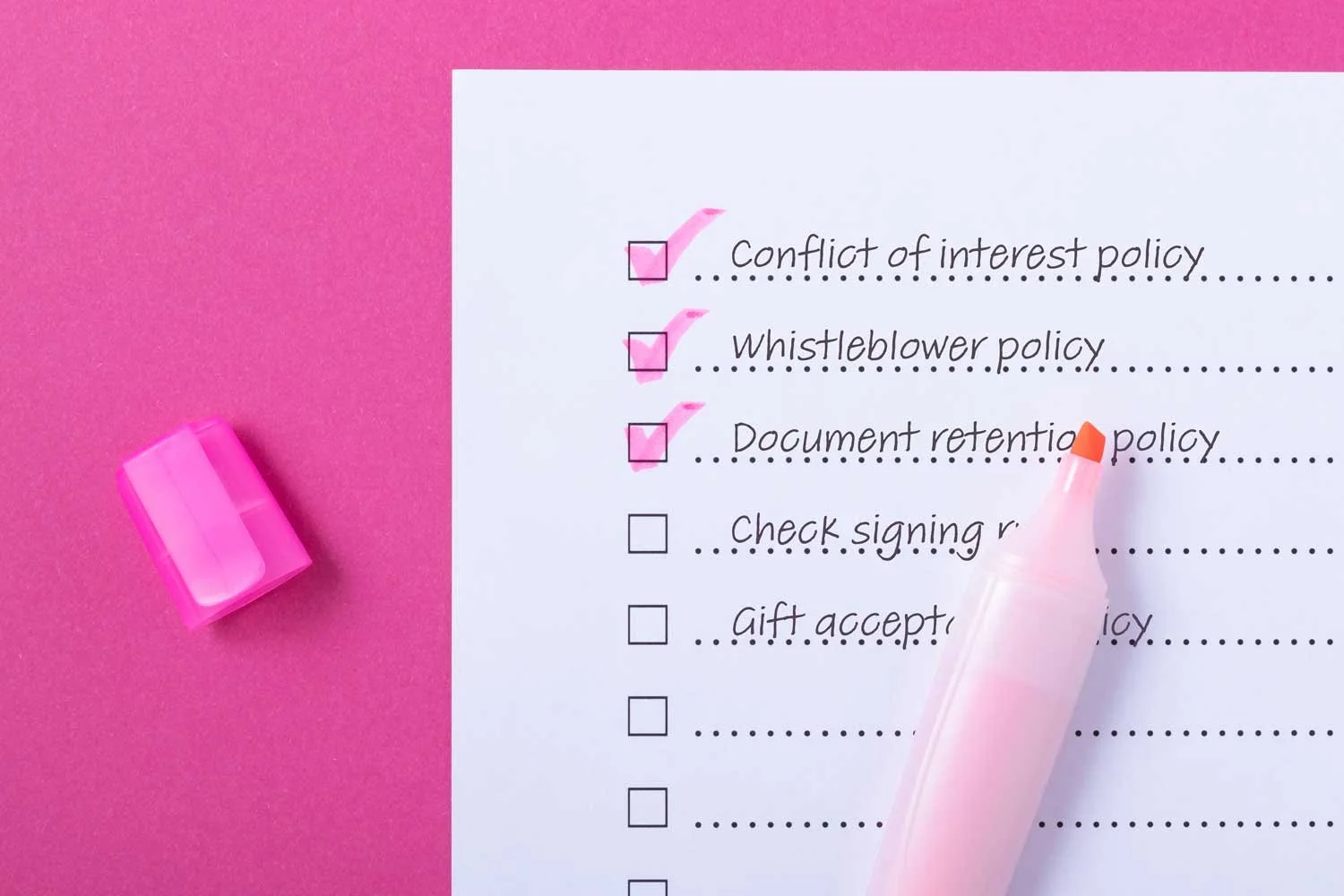
If you run a small nonprofit, you do not need every policy under the sun on day one.
You do need enough:
To make decisions cleanly
To protect the organization
To reassure a funder that your operation is not held together by goodwill, a heroic volunteer, and one mysterious spreadsheet that only one person understands
Here is a practical starting checklist for a small Indiana nonprofit.
Minimum viable policy checklist
Governance and accountability
Conflict of interest policy
Whistleblower / anti-retaliation policy
Document retention and destruction policy
Board minutes and record keeping practice
Board review process for Form 990 before filing
The IRS asks Form 990 filers directly about conflict of interest, whistleblower, and document retention/destruction, and it also asks whether the governing body received a copy of Form 990 before filing.
Financial management
Expense approval policy
Payment authorization or check-signing rules
Reimbursement policy
Bank-reconciliation and financial-review procedure
Gift acceptance policy
These may live as separate policies or as one short set of financial controls. The important thing is that they are written down and used. National Council of Nonprofits guidance points to sound governance and gift-acceptance guidance as core practice.
Website and public-facing trust
Privacy policy
Cookies or tracking disclosure
Donation terms or refund language, if online donations are accepted
Accessibility statement
A privacy policy should explain what the organization collects, how it uses that information, whether it shares it, and how users can ask questions. Indiana’s consumer data law is in effect, though it does not apply universally to every organization, and transparent website privacy practices still matter.
Indiana-specific housekeeping
Verify entity status and due date in INBiz
Confirm whether any fundraising activity involves a paid professional solicitor or fundraising consultant
Keep key records accessible: IRS determination letter, organizing documents, bylaws, recent 990s, and major board actions
Indiana’s Attorney General states that paid professional solicitors and fundraiser consultants must register, and INBiz is the state portal for entity maintenance and report filing.
Where to get drafting help
IRS governance guidance for Form 990 filers
IRS recordkeeping guidance for exempt organizations
National Council of Nonprofits governance and gift-acceptance guidance
Indiana Attorney General fundraising guidance
INBiz for report filing status and due dates
A good rule of thumb
If a policy answers one of these questions, it probably belongs on your list:
Who decides?
Who approves?
What gets documented?
What gets kept?
What happens if something goes wrong?
What do we tell people about the data they give us?
That is not legal poetry, but it is a pretty good nonprofit survival strategy.
If your organization has grown faster than its internal systems, this checklist is a good place to start.